
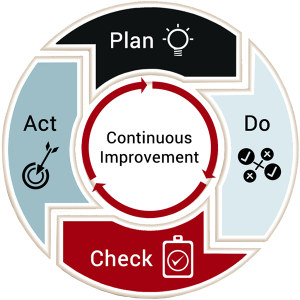
The world is constantly changing—there's no doubt about it. To keep growing and developing, organizations have to change, too. In fact, they need to commit to continuous improvement, and to do this effectively, they must balance decisions that drive short-term growth with those that will produce long-term benefits.
The Theory of Constraints is a management philosophy that views a company as a complex, dynamic system. It provides the tools and methods needed to create a structured path for continuous improvement, known as the Process of Ongoing Improvement (POOGI).
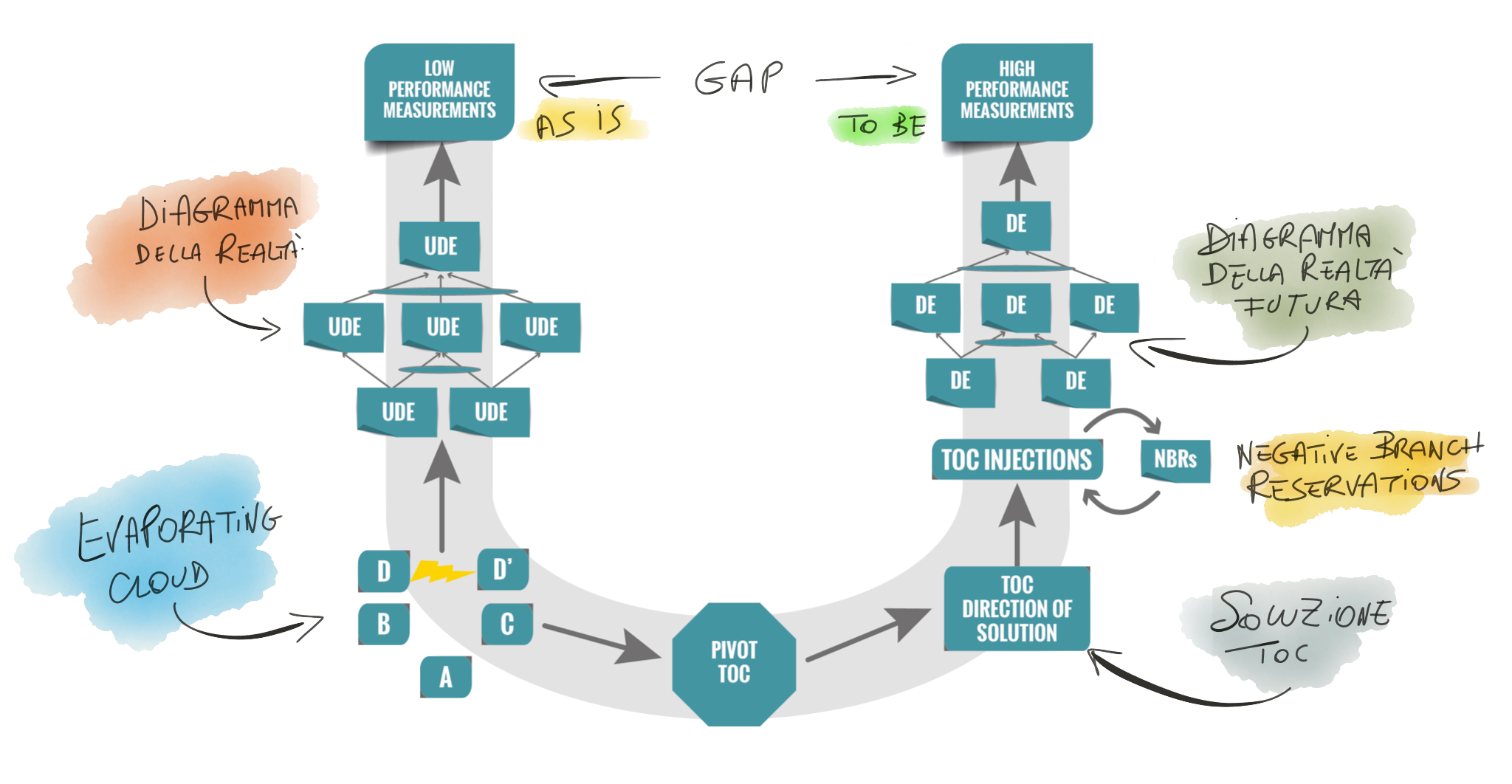
To approach improvement from a "systems" perspective, you need to answer four simple questions:
- Why change?
- What to change?
- What to change to? (What solution should you choose?)
- How to change? (How do you make it happen?)
The gap between what you have and what you want—between your current results and your expected ones—becomes the reason for the change. This answers the question, "Why change?" A good way to start here is by developing a Goal Tree.
The second step, "What to change?", is crucial for figuring out where to intervene so you don't waste energy and can maximize your results.
Once you've identified what to change, you'll need to decide on the best solution among all the possible options to achieve that improvement.
The final step is defining what you'll do to create a lasting change. This means involving all relevant parties and, most importantly, evaluating the impact of the chosen solution—just in case the remedy is worse than the disease!
These four questions — why change, what to change, what to change to, and how to change — are the foundation of every engagement I take on. They sound simple. In practice, most organisations skip straight to "how to change" without ever properly answering the first two, which is why so many improvement efforts fail to stick.
If you'd like to explore how the Theory of Constraints applies to your specific situation — whether in manufacturing, supply chain, or project management — let's have a conversation.